
Introducing ShackAssistant – the successor to MiniBook
After years of MiniBook, it is time for the next step. ShackAssistant grew out of MiniBook and carries on where it stopped: a complete station program for Windows that brings logging and operating together in one place.
My goal is to keep everything as simple as possible – and still put down a tool that is truly powerful. I gathered the best ideas from the ham radio world and brought them together in this one tool.
Björn Pasteuning, PD5DJ
Every feature has to earn its place on the screen. The result is a program you can take in at a glance – compact and easy to use, yet it does the things you would otherwise open three or four other programs for.
Coming from MiniBook?
Your logbooks come along. A MiniBook .mbk logbook opens as it is, and ADIF exports from MiniBook are read too.
Key features
- Logging – country, flag, zones, distance and heading appear as you type; worked-before colours show at a glance whether a station is new; QRZ lookup, call history, search, bulk edit and ADIF import and export.
- Your log, your way – keep it as a fast local database, as a single file you can copy anywhere, or on your own MySQL/MariaDB server. Automatic backups that clean up after themselves.
- Rig control – through Hamlib, over serial or network, with named presets and PTT over CAT, RTS or DTR. A built-in rigctld server lets WSJT-X and other programs share the radio.
- DX cluster and band map – over 200 clusters ready to pick, filters, spots coloured against your own log, and one click to tune to a spot.
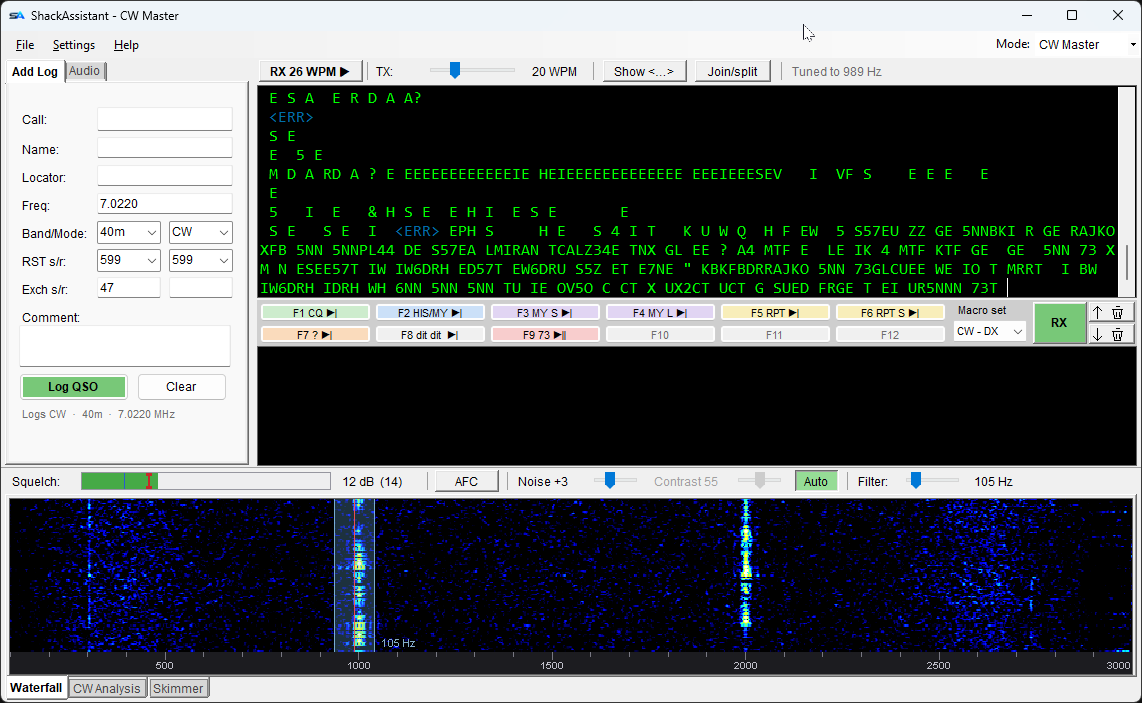
- Key Master: CW and RTTY – a waterfall, decoder and skimmer, macro keys and transmit, with its own quick log that always logs the right mode. No second program needed.
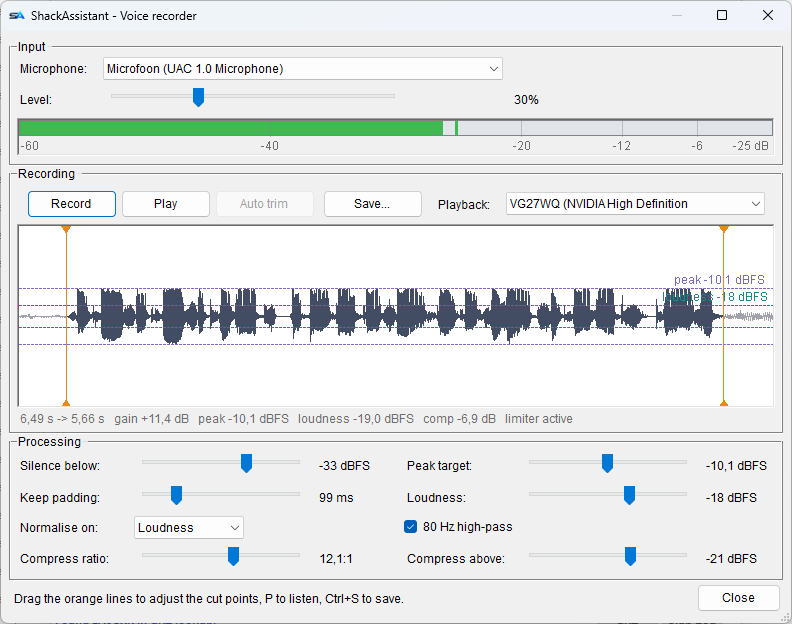
- Message keys and voice keyer – twelve F-keys with your messages, CAT commands and recorded voice messages, plus a built-in recorder to make them.
- Contesting – contests are defined by standard
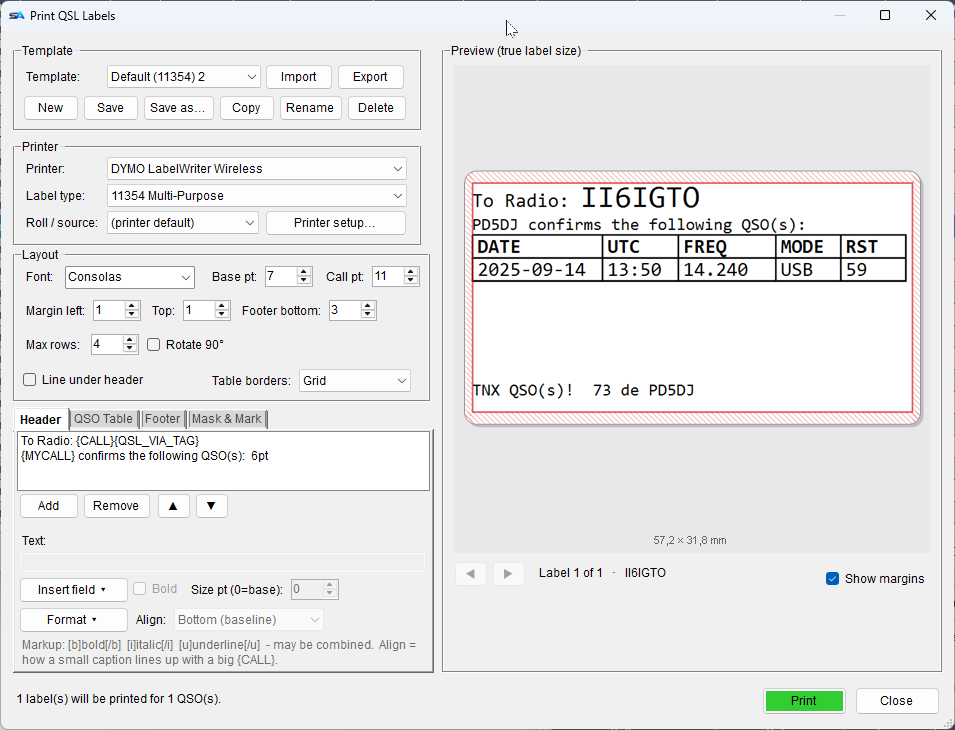
.udcdefinition files, with a one-row entry line, dupe checking, serial numbers, a live score and Cabrillo export. Multi-Op: several PCs in the shack work the contest together – no server needed, the machines find each other on the LAN, share QSOs within a second, keep the serial numbers apart, and one machine can share its DX cluster connection with the others. - QSL printing – roll labels, label sheets and pre-printed cards, each with its own editor and calibration, and a print queue.
- Works with the rest – receives QSOs from WSJT-X and other programs over UDP, broadcasts your radio status to other applications, and uploads to QRZ, Club Log and LoTW.
Free, and documented
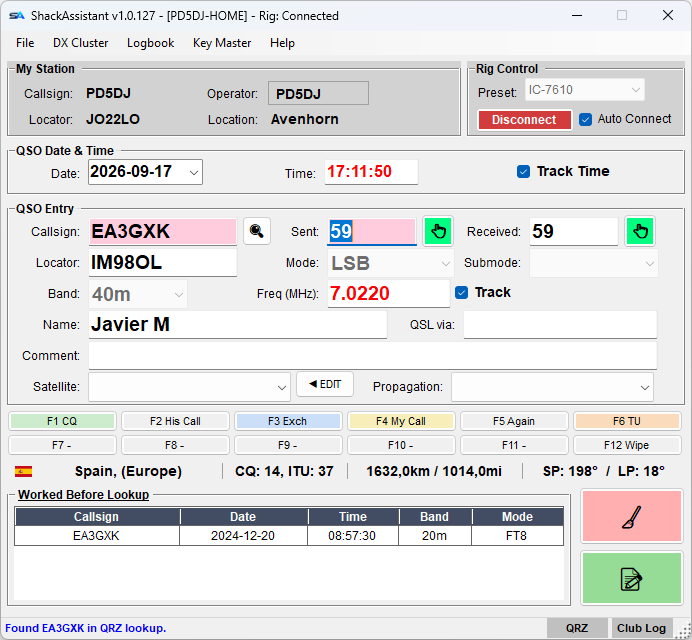
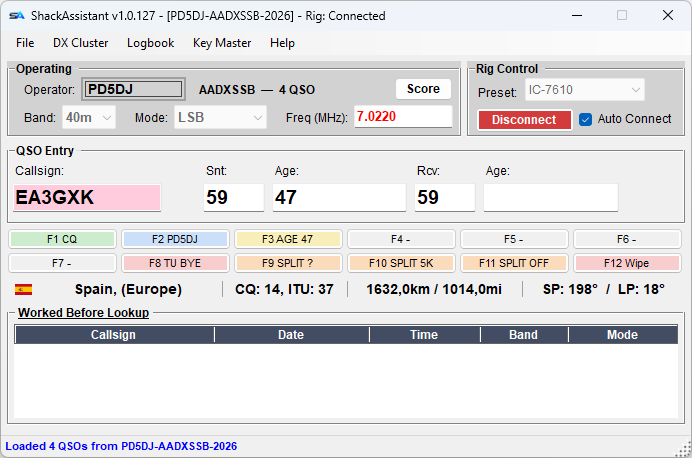
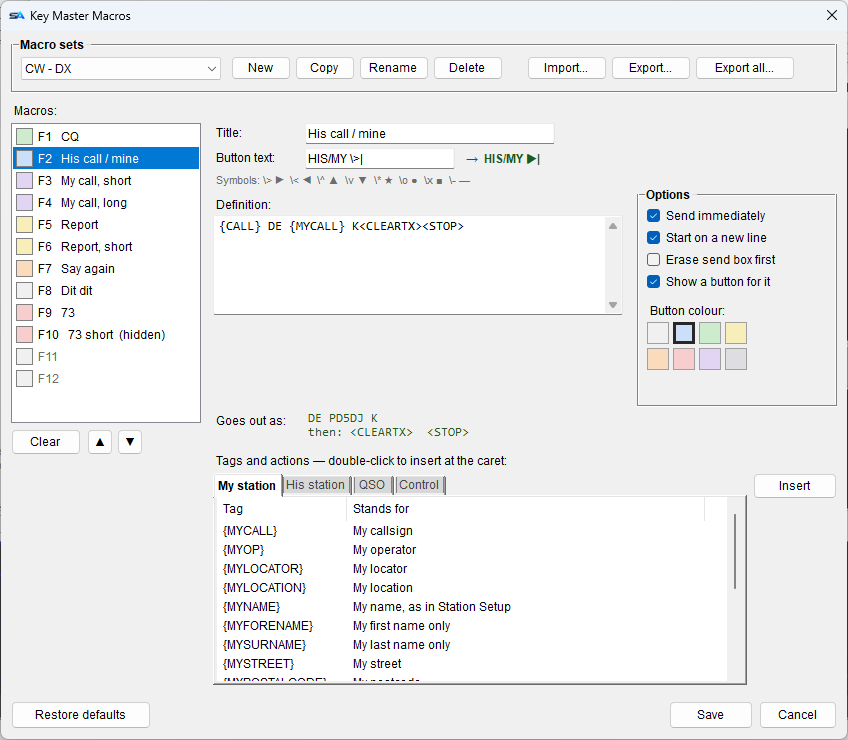
ShackAssistant is free of charge for Windows 10 and 11. Thirteen step-by-step guides take you from the installer to your first QSO and on to contests and QSL cards.
Download it and read the guides at www.shackassistant.com.
73, Björn – PD5DJ